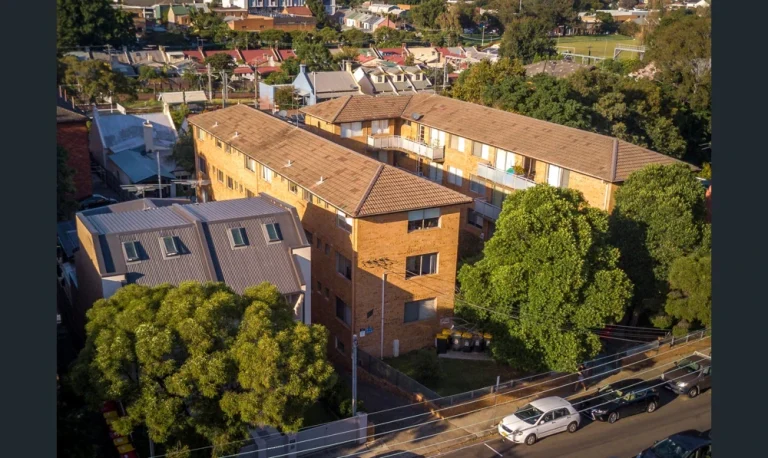
Newtown, NSW: Investment Apartment Renovation
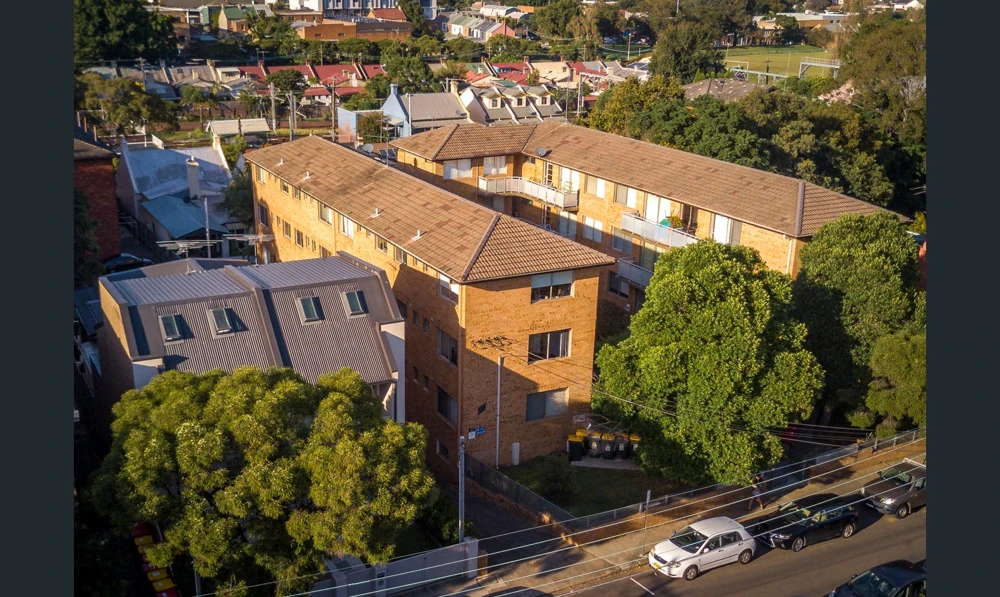
This project involved the strategic reconfiguration of a compact inner-city apartment in one of Sydney’s strongest rental markets. The client, an experienced property investor, engaged ROI Projects to transform a dated one-bedroom layout into a higher-performing rental asset,without increasing the building footprint.
The apartment is located in Newtown, a high-demand suburb with a strong tenant base of young professional couples. With no capacity to extend and limited internal space, the brief required careful feasibility planning, precise design decisions, and disciplined value engineering to ensure every square metre worked harder.
ROI Projects delivered the project end-to-end, providing feasibility analysis, design development, approvals management, and construction. The outcome was a more functional, investment-grade layout aligned with local tenant expectations and long-term rental performance.
Client: Investor | Property: Inner-city apartment | Status: Completed | Services: Feasibility, Design, Approvals, Construction
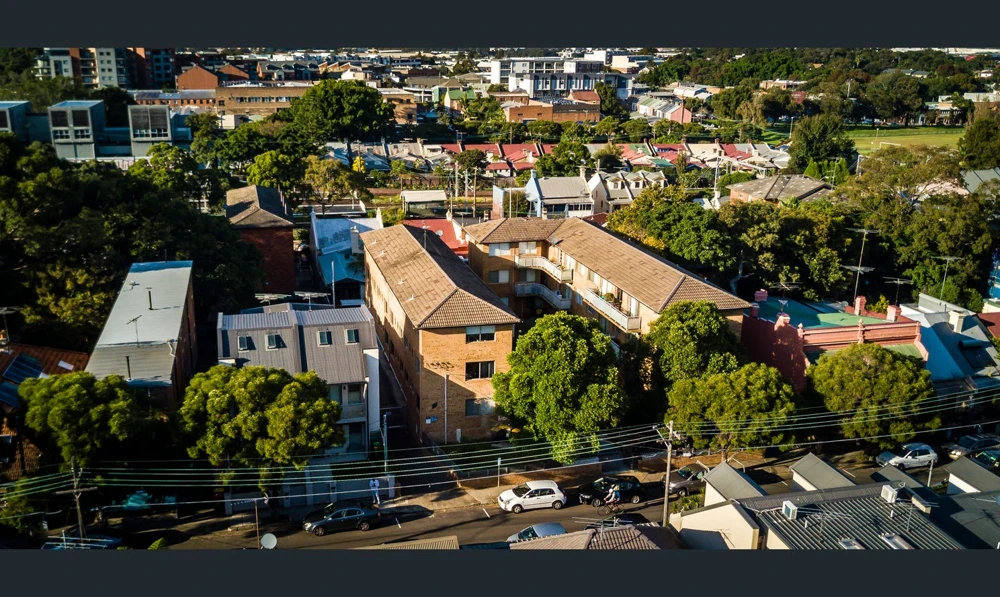
Newtown’s rental market is dominated by 20–39-year-olds, mostly couples without children, with a high proportion renting terraces and apartments. The client’s existing 1-bedroom flat wasn’t competitive in this environment and couldn’t achieve the rental uplift the owner needed.
The core issue wasn’t approvals, it was space. With no option to expand the footprint, every square metre had to deliver more functionality.
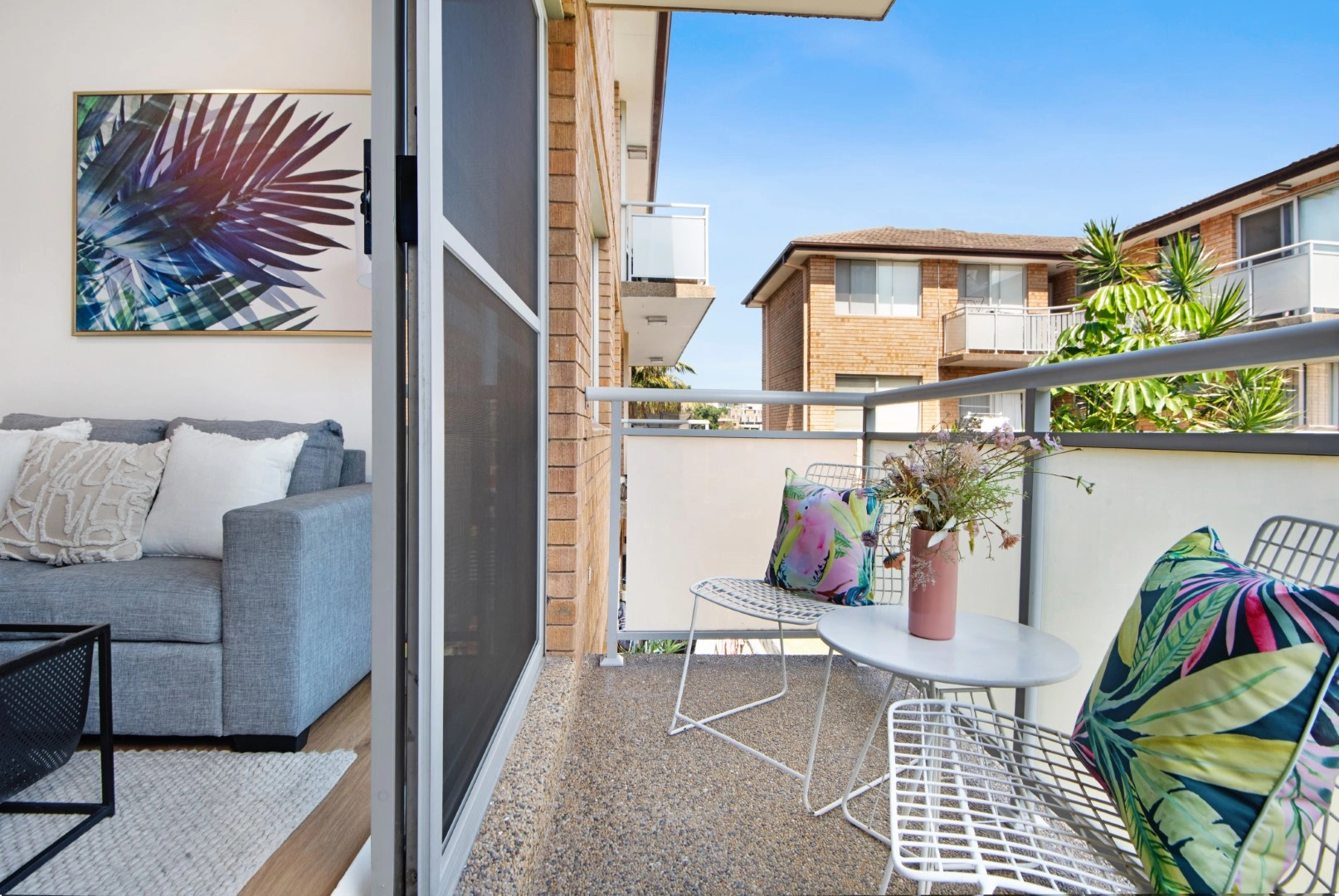
The goal: create a more functional rental product aligned with Newtown’s demographic, without altering the apartment’s external structure.
To maximise rental yield, we first analysed rental demand and tenant preferences in Newtown. Students and young professionals were seeking compact but highly functional spaces with quality finishes, and were willing to pay a premium for them.
The feasibility confirmed the highest return would come from converting the oversized single bedroom into a compact 2-bed layout, providing improved functionality and broader tenant appeal. The strategy focused on:
Optimising circulation spaces
Improving privacy between zones
Ensuring the layout supported flexible use of space
Prioritising durable, investment-grade finishes that maximise longevity
This analysis shaped the design direction and informed all value-engineering decisions.
The renovation was engineered to deliver maximum functional value within a constrained floor area:
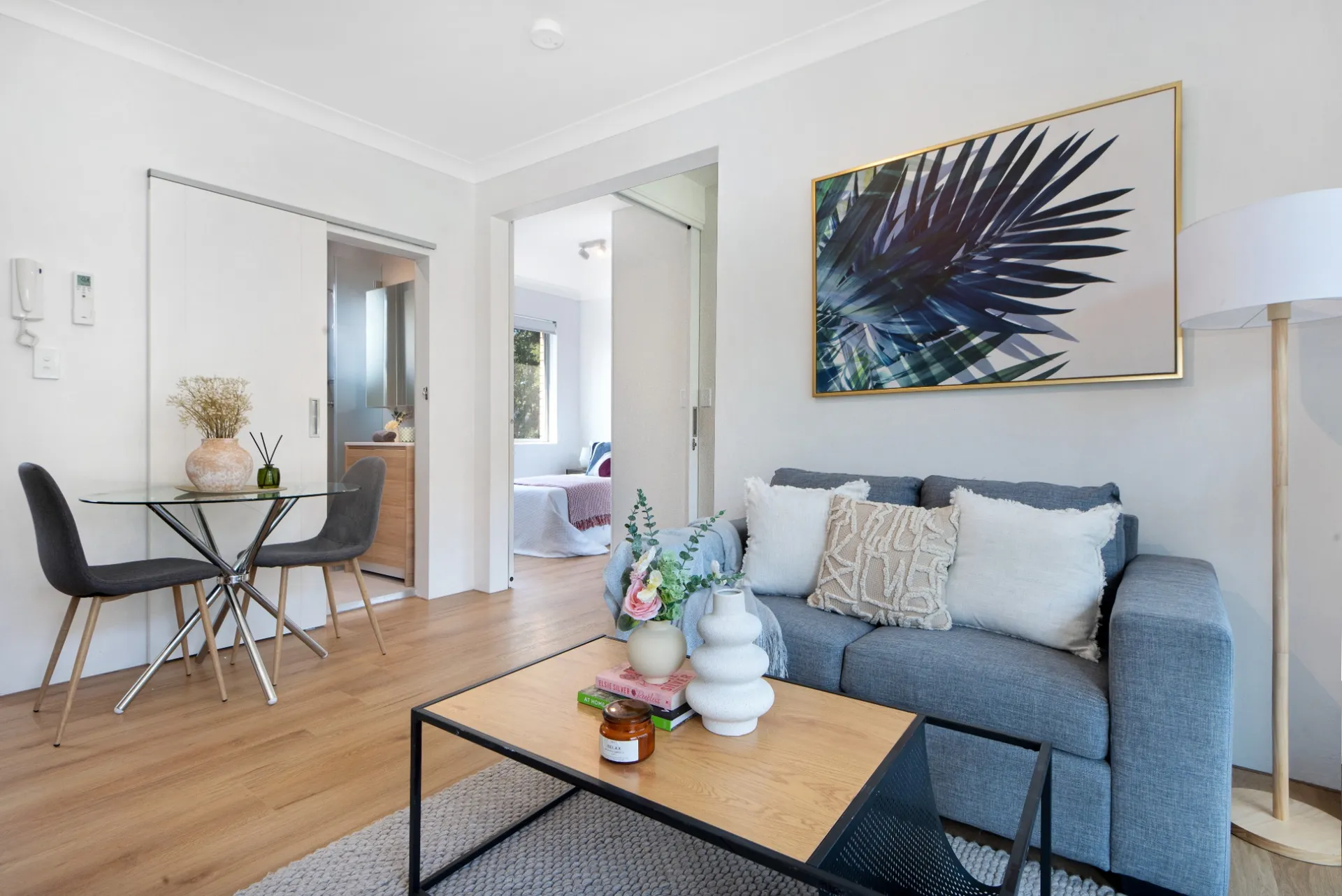
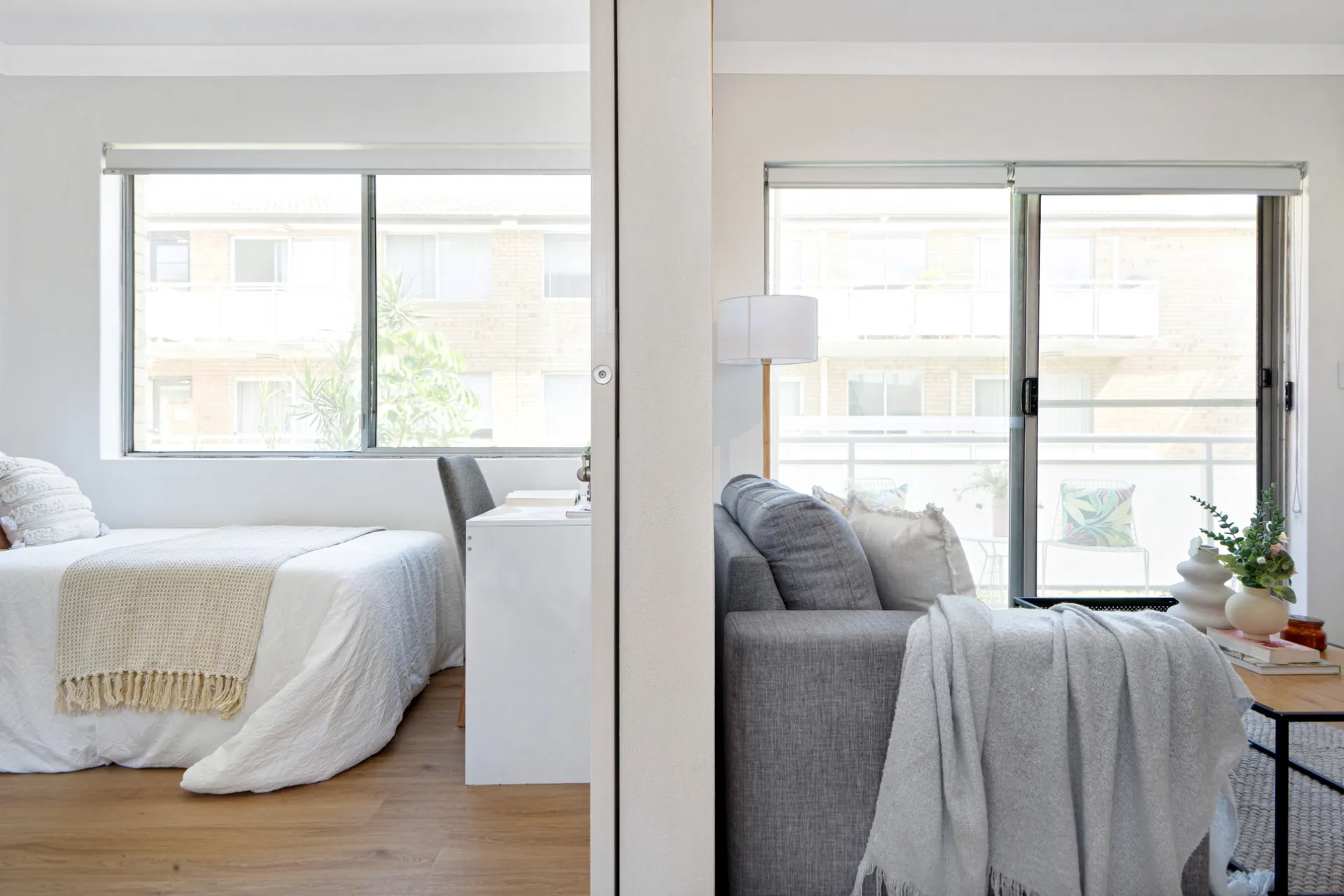
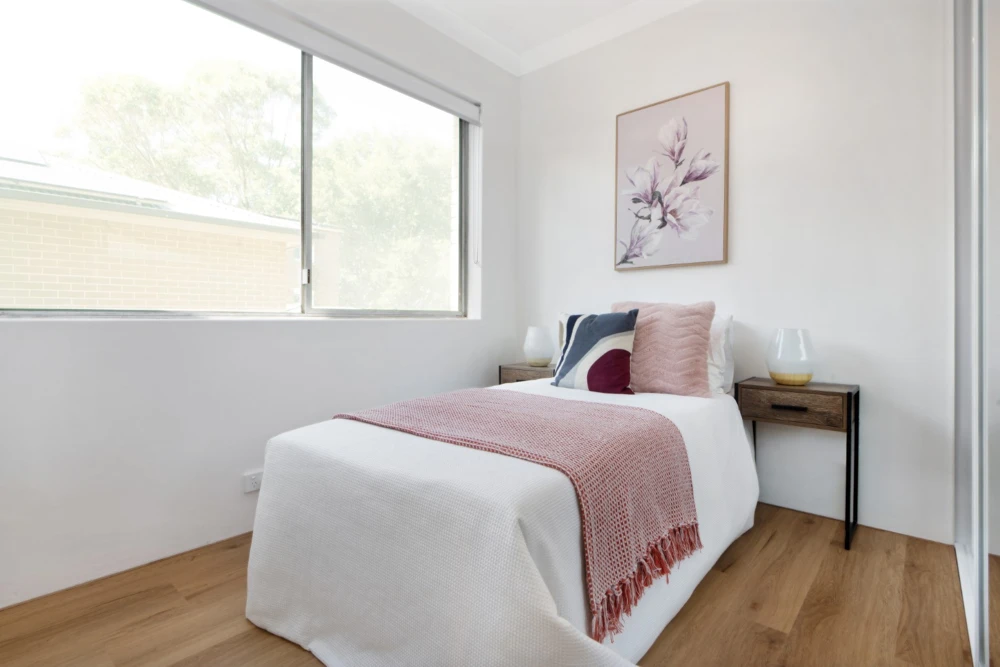
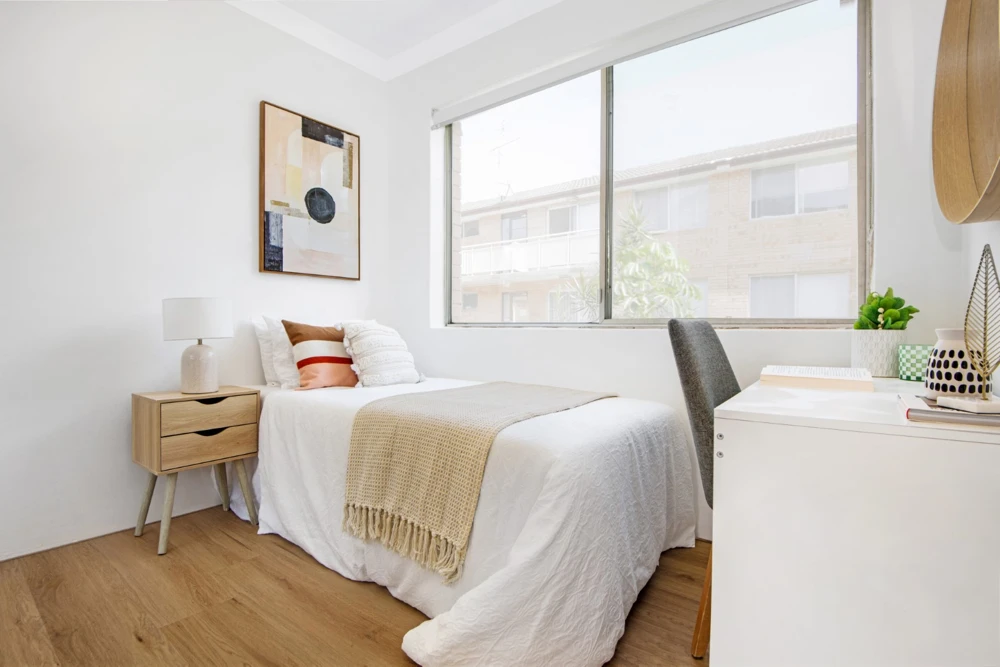
Converted the large single bedroom into a compact 2-bed layout using a three-way door system to enable flexible space use.
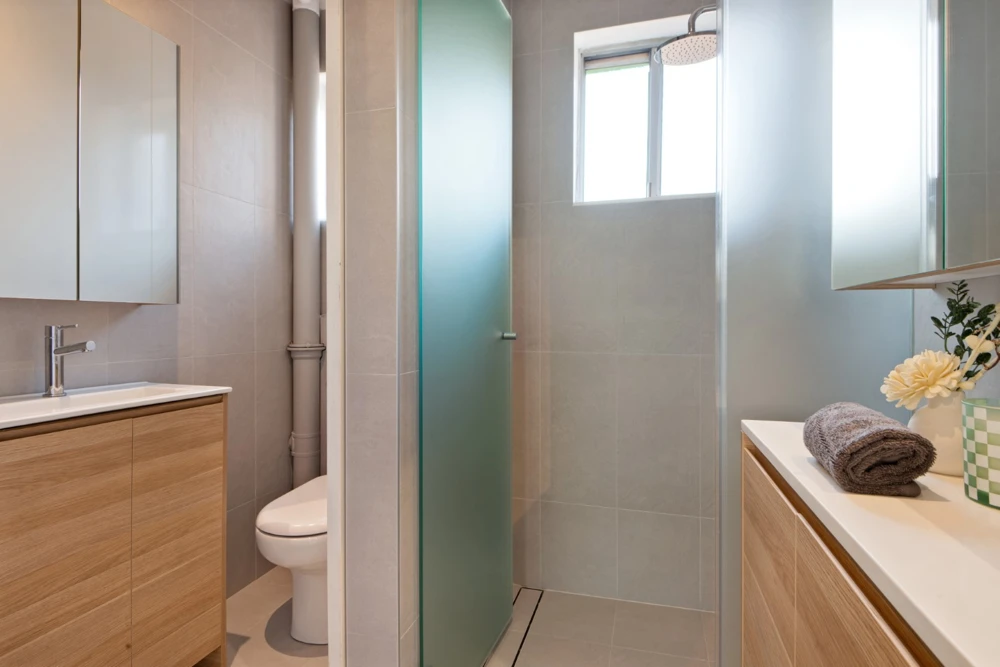
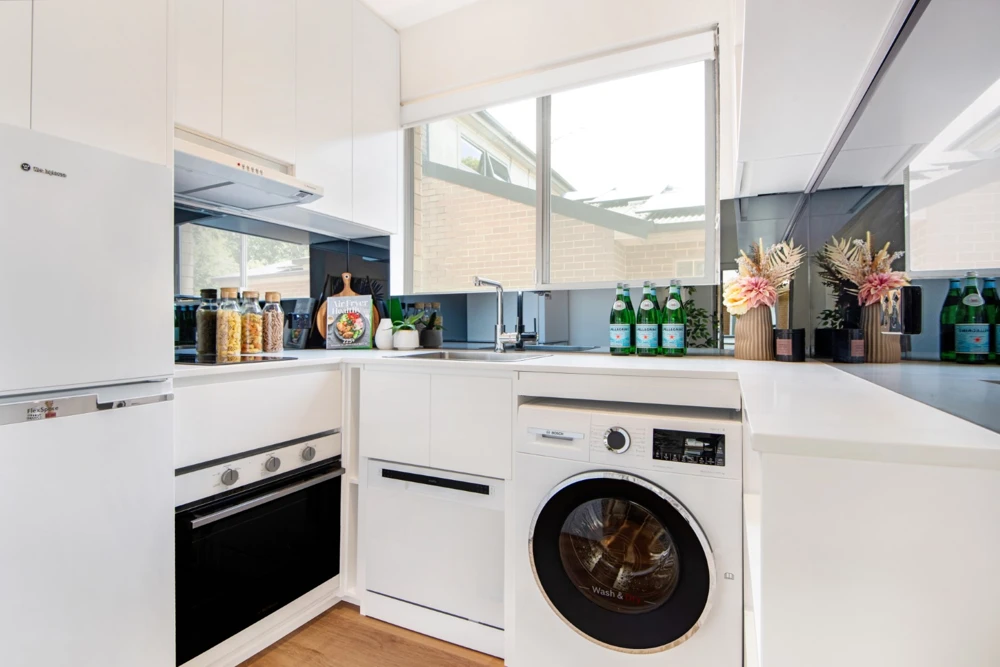
Installed a new bathroom and new kitchen, both redesigned for efficient space planning.
Added large robes to both bedrooms to meet storage expectations for long-term renters.
Upgraded electricals, lighting, and air conditioning to improve comfort and rental appeal.
Specified hybrid flooring for durability, aesthetics, and cost efficiency.
Fitted a full suite of appliances into the compact kitchen zone, maximising functionality without overcrowding the space.
This value-engineering approach ensured the finished apartment aligned with what Newtown tenants actively look for.
The renovation remained entirely internal, meaning no development application was required. Efficient design documentation, coordinated trades, and careful scheduling enabled the project to progress quickly through approvals and into construction without delays.
The build phase focused on efficient delivery within a constrained apartment footprint, with strict alignment to the approved feasibility and design strategy.
Key construction elements included:
Construction was carefully managed to control costs, avoid overcapitalisation, and ensure the final outcome delivered the intended rental uplift and long-term performance.
Newtown’s rental market is dominated by 20–39-year-olds, mostly couples without children, with a high proportion renting terraces and apartments. The client’s existing 1-bedroom flat wasn’t competitive in this environment and couldn’t achieve the rental uplift the owner needed.
The core issue wasn’t approvals, it was space. With no option to expand the footprint, every square metre had to deliver more functionality.
The goal: create a more functional rental product aligned with Newtown’s demographic, without altering the apartment’s external structure.
To maximise rental yield, we first analysed rental demand and tenant preferences in Newtown. Students and young professionals were seeking compact but highly functional spaces with quality finishes, and were willing to pay a premium for them.
The feasibility confirmed the highest return would come from converting the oversized single bedroom into a compact 2-bed layout, providing improved functionality and broader tenant appeal. The strategy focused on:
Optimising circulation spaces
Improving privacy between zones
Ensuring the layout supported flexible use of space
Prioritising durable, investment-grade finishes that maximise longevity
This analysis shaped the design direction and informed all value-engineering decisions.
The renovation was engineered to deliver maximum functional value within a constrained floor area:
Converted the large single bedroom into a compact 2-bed layout using a three-way door system to enable flexible space use.
Installed a new bathroom and new kitchen, both redesigned for efficient space planning.
Added large robes to both bedrooms to meet storage expectations for long-term renters.
Upgraded electricals, lighting, and air conditioning to improve comfort and rental appeal.
Specified hybrid flooring for durability, aesthetics, and cost efficiency.
Fitted a full suite of appliances into the compact kitchen zone, maximising functionality without overcrowding the space.
This value-engineering approach ensured the finished apartment aligned with what Newtown tenants actively look for.
The renovation remained entirely internal, meaning no development application was required. Efficient design documentation, coordinated trades, and careful scheduling enabled the project to progress quickly through approvals and into construction without delays.
The build phase focused on efficient delivery within a constrained apartment footprint, with strict alignment to the approved feasibility and design strategy.
Key construction elements included:
Construction was carefully managed to control costs, avoid overcapitalisation, and ensure the final outcome delivered the intended rental uplift and long-term performance.
The renovation delivered exactly what the owner needed:
35% increase in asking rent, driven by the new 2-bed configuration and strong local rental demand.
7.2% return on renovation spend, exceptional for a small-footprint apartment.
A functional, durable, investment-grade interior designed for long-term rental performance.
Smart internal reconfiguration can significantly outperform costly extensions in high-demand areas.
Designing specifically for the dominant tenant demographic ensures high occupancy and strong rental outcomes.
Even compact apartments can deliver excellent ROI when functionality is maximised.
If you have a project in mind, now is the perfect time to speak with someone who can help you plan it properly.