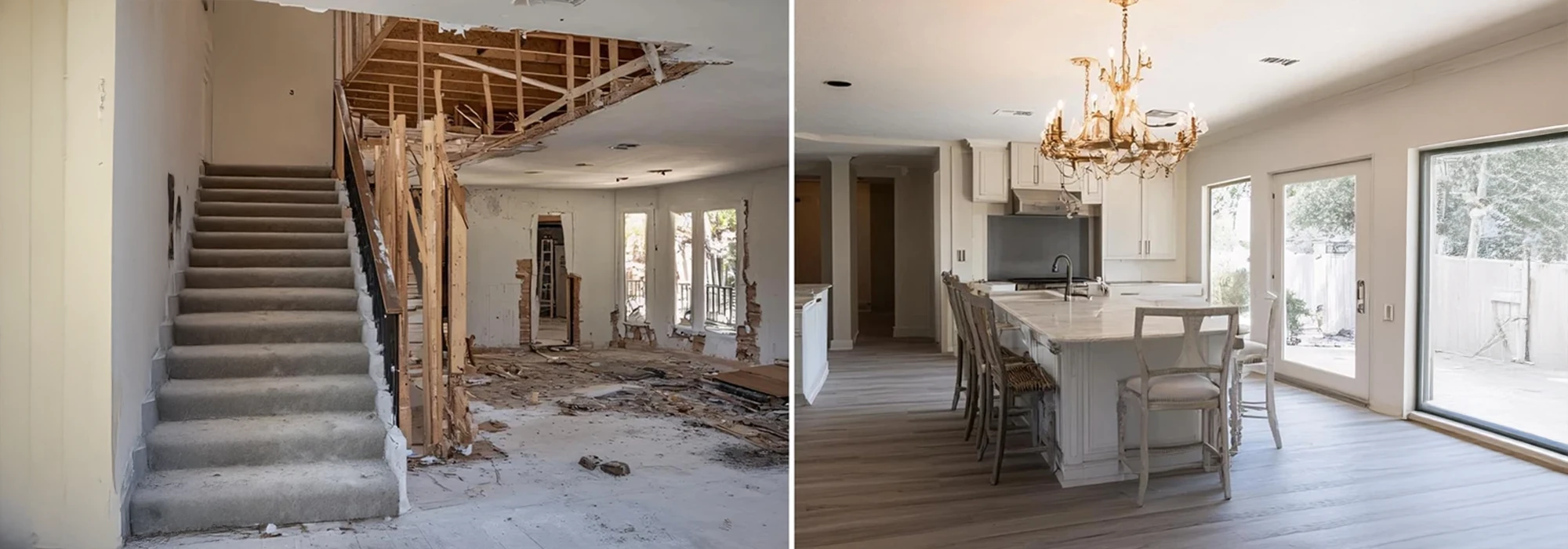
Renovating Investment Properties for Return, Not Regret
Renovating your investment property is never about personal taste. It’s about return on investment. When you renovate investment properties emotionally, you overspend on features tenants won’t pay extra for. When you renovate strategically, you increase rental income, protect market value, and strengthen long-term performance without wasting capital on improvements that don’t move the needle.
Most property investors renovate like homeowners, and that’s where profit quietly disappears.
If you’re renovating an investment property in Sydney, you’re operating in one of the most expensive property markets in the world. That means every renovation decision must work harder. A poor layout, the wrong upgrade sequence, or one budgeting mistake can erase years of rental returns and turn what should be a profitable investment into a financial drain.
This guide shows you how to renovate investment properties as an investor, not an owner-occupier.
Why This Matters to You as a Property Investor
Every renovation dollar either improves your asset or weakens it. A properly planned property renovation can increase rental income, improve rental yields, protect cash flow, lift market value, improve property values over time, attract quality tenants, reduce vacancy periods, and strengthen financial outcomes across your portfolio.
A poorly planned renovation does the opposite, even if the finished result looks impressive to you personally. If you’re buying an investment property to improve it, or renovating a property you already hold, the difference between profit and pain comes down to choices made before work starts, not after the paint dries and tenants move in.
The Renovation Mistakes That Kill Rental Returns
Renovating for Yourself Instead of the Tenant
Overcapitalising is one of the most common mistakes when investors renovate investment properties. Just because you personally like stone benchtops, brushed brass fixtures, and designer tray sinks doesn’t mean tenants will pay extra rent for them. Most won’t notice, and those who do won’t pay enough extra to justify the cost difference.
Tenants care about function far more than finish. They want light, good layout, adequate storage, easy maintenance, durable surfaces that don’t show every mark, and overall functionality that makes daily life easier. A gold faucet or boutique fixture rarely improves rental return—it simply increases your replacement cost when it eventually needs servicing or updating.
The goal is not to impress visitors or create something Instagram-worthy. It’s to improve cash flow and tenant retention through practical, durable upgrades.
Underestimating the True Cost of Renovation
Many renovators focus only on the visible renovation budget: kitchen cabinets, new floor finishes, paint and joinery, and bathroom upgrades. But the real damage to your budget is often caused by what lies underneath, including electrical wiring upgrades to meet current code, plumbing replacements for aging systems, waterproofing failures that weren’t visible initially, structural rectification when you open walls, drainage issues that surface during excavation, and compliance upgrades required by current regulations.
Older investment properties in Sydney are particularly vulnerable to these hidden costs. Older Sydney residential property carries infrastructure risk that can’t be fully assessed until renovation work begins. If you don’t budget for that risk with adequate contingency, it will appear later at maximum inconvenience and cost when you’re already committed and have limited options.
A renovation without contingency planning isn’t a budget—it’s a gamble that can crush cash flow. If you skip contingency planning, the renovation costs associated with hidden defects will find you mid-project when your leverage is worst and you’re forced to either complete the work at inflated cost or leave the property in an unrentable state.
Ignoring Layout, Focusing Only on Finishes
Two renovations on the same house can produce dramatically different returns, not because of design style or finish quality, but because of layout decisions. Improving layout with even a slightly smarter reconfiguration might turn a study into a legitimate bedroom, improve natural light flow throughout the property, reduce wasted corridor or awkward space, improve kitchen usability and workflow, and allow better furniture placement that makes rooms feel larger.
Layout affects rental income far more than colour schemes or fixture brands ever will. Paint is cosmetic. Layout is commercial, and it directly impacts how tenants experience the property daily.
Selecting a Builder Based on Price Alone
The cheapest quote is often the most expensive renovation decision you’ll make. Low quotes often omit critical detail, reduce material and workmanship quality, hide costs that surface as variations later, create disputes about scope and responsibility, rely on future variations to make up lost margin, and cut corners on durability that create maintenance issues within months.
A poor renovation process costs far more than a high-quality tradesperson ever will. What matters isn’t your starting price—it’s your ending price, and that’s dictated by planning, documentation, and execution quality, not discounts or promises that seem too good to be true.
How to Renovate Investment Properties for Maximum Return (& Minimum Regret)
Start With Feasibility, Not Inspiration
Most investors start with Pinterest boards and renovation shows. Professionals start with feasibility analysis. Instead of asking “What could this be?” you ask “What makes financial sense given market conditions, tenant demand, and realistic costs?”
A feasibility-first approach to renovating investment properties ensures that the renovation improves rental return, protects cash flow, increases the property’s market value, delivers better resale outcomes, and supports long-term capital growth rather than just making the property look nicer.
Feasibility analysis looks at renovation viability given current market conditions, market ceilings in your specific suburb, suburb-specific limitations and opportunities, realistic return on investment projections, alternative strategies that might deliver better outcomes, and costs associated with compliance and regulatory requirements.
It answers the critical question: Is this renovation financially smart, or just emotionally attractive? Sometimes the answer is that the property isn’t worth renovating at all, and your capital is better deployed elsewhere.
Align Renovation Strategy with the Market, Not Emotion
Every suburb is different. Every property market segment attracts a different tenant profile with different priorities and rental expectations. A good investor renovation does three things consistently: appeals to the right demographic for that specific location, withstands typical tenant wear without constant maintenance, and stays neutral and timeless so it doesn’t date quickly or limit your tenant pool.
This means making decisions that favour hard-wearing surfaces that don’t show every mark, neutral finishes that appeal broadly rather than to niche tastes, functional kitchens with durable kitchen cabinets, lighting upgrades that improve first impressions dramatically, practical storage solutions that tenants actually use, and durable flooring such as quality floating floorboards where appropriate.
Don’t get caught up in Instagram features, boutique fixtures, or specialty finishes that tenants won’t pay for. Renovations can significantly increase returns, but only when design aligns with genuine tenant demand in your specific market segment.
Upgrade What Tenants Use Daily
Choose to spend renovation budget where tenants will feel the difference every single day. This drives solid ROI through higher rent and longer tenancies. High-impact upgrades include functional kitchens with good workflow and storage, reliable bathrooms with proper ventilation, intelligent storage throughout the property, low-maintenance flooring that’s easy to clean, modern lighting that makes spaces feel welcoming, and effective climate control for year-round comfort.
Comfort and functionality extend tenancies. Increased tenancy length means stability, fewer vacancy periods, lower turnover costs, and better cash flow consistency. Stability improves rental yield and makes the investment more predictable.
Stage the Renovation Strategically
Not all upgrades must be completed at once, and attempting to do everything immediately often leads to budget blowouts and overcapitalisation. Smart renovation projects follow a logical sequence: structure first to address any fundamental issues, services next to ensure electrical and plumbing are sound, layout improvements to optimize space usage, surfaces and finishes after the functional work is complete, and final upgrades based on tenant feedback and market response.
Staging the renovation allows actual performance and tenant response to guide future investment decisions, and helps you spread capital risk over time rather than committing everything upfront.
Sydney’s Renovation Reality for Investment Properties
Sydney is not a forgiving market for investment property renovations. Planning pathways, council zoning restrictions, access constraints on older properties, and aging service infrastructure can all add significant cost without adding equivalent value to rental income or property valuation.
A renovation approach that works in another capital city may fail completely in Baulkham Hills, Ryde, or Marrickville because of local conditions and regulations. Factors that affect renovation outcomes in Sydney include council controls and their interpretation, approval processes and timelines, zoning legislation that limits certain improvements, infrastructure age and capacity, planning delays that extend holding costs, tax implications of different renovation choices, interest rate sensitivity affecting your borrowing capacity, and resale ceilings in specific suburbs that cap potential returns.
Renovating investment properties in Sydney requires local expertise and understanding of how different councils operate, not just general renovation knowledge.
Depreciation, Deductions and Tax Benefits
One of the most overlooked advantages when you renovate investment properties is tax efficiency. When renovating investment properties correctly, you may have access to depreciation deductions on new assets, deductions for eligible renovation items, capital works allowance for structural improvements, plant and equipment assets that can be written off, and various tax benefits at tax time that improve overall returns.
Certain capital improvements may also boost your depreciation schedules significantly and help manage operating costs over the medium term. Always seek advice from a qualified accountant with investment property experience to confirm what is deductible under current legislation, what qualifies for capital works treatment, which specific assets are depreciable and at what rate, and proper treatment of improvements versus repairs for tax purposes.
Tax decisions can alter renovation profitability dramatically, sometimes turning a marginal renovation into a strong performer when tax benefits are properly captured.
Jay’s Take: Why Investors Lose Money Quietly
“Years in the building and accounting game has taught me this repeatedly: most investors don’t lose money dramatically through obvious disasters. They lose it quietly, through inefficiency, poor planning, and emotional decisions that seem reasonable at the time but don’t deliver financial returns.”
Here’s where money actually disappears when you renovate investment properties: poor renovation sequencing that creates rework, weak feasibility analysis that misses market realities, emotional upgrades that don’t lift rent, ineffective layouts that limit tenant appeal, budgeting mistakes that underestimate true costs, and targeting the wrong tenant demographics for that specific location.
Let me summarize it plainly: if the numbers don’t work on paper before you start, they won’t magically work on site once the renovation is complete.
Renovate, Extend or Rebuild?
Sometimes a basic renovation isn’t the best path forward and won’t move the needle enough to justify the investment. If the existing layout is fundamentally broken, the structure is tired and requires major work anyway, rental properties in that area have capped potential regardless of finishes, or the land is significantly underutilised, an extension, rebuild, or duplex development can outperform renovation alone.
Feasibility analysis is where those investment strategy decisions are tested properly, well before you commit capital. It’s not guesswork or hoping for the best.
If floor plans are inefficient and can’t be fixed without major structural work, existing structures are obsolete or too expensive to bring to modern standards, land is underutilised and zoning permits better use, or rental yield is capped by suburb limitations, then extension, rebuild, or duplex may deliver significantly better returns than renovation.
Common Myths About Renovating Investment Properties
“Renovation guarantees capital gains”
No. Market structure and broader economic conditions determine capital gains. Renovation improves rental income and can protect value, but it doesn’t guarantee capital appreciation.
“Better finishes attract better tenants”
Not necessarily. Good layouts, functionality, and location attract long-term quality tenants. Tenants want comfort and practicality, not luxury branding that doesn’t improve their daily life.
“Renovation always lifts property value”
Only when tenant demand and market conditions support it. Overcapitalised renovations can actually reduce your effective return because you’ve invested more than the market will recognize.
“One renovation solves everything forever”
Long-term performance requires ongoing maintenance and periodic updates. Plan for durability and sensible servicing schedules, not perfection that lasts decades without intervention.
“Cosmetic renovations always lift rent proportionally”
No. Functional improvements consistently outperform purely cosmetic ones in rental return, and the relationship between renovation cost and rent increase is rarely linear.
Common Questions About Renovating Investment Properties
Is renovating investment properties worth it? Can it increase rental income?
Renovating can absolutely be worth it when return, risk, and cost align properly. It will likely increase rental income, depending on the specific changes made and whether they’re feasible, functional, and genuinely improve tenant lifestyle or comfort rather than just aesthetics.
Should I renovate before leasing?
Yes, renovate before marketing for new tenants. Property improvements significantly influence tenant quality and achievable rent when they’re done right. First impressions matter enormously in competitive rental markets, and you can’t easily raise rent mid-lease to capture renovation value.
What should I renovate first?
Layout optimization, wet areas like bathrooms and kitchens, lighting improvements, heating and cooling, and practical storage consistently outperform purely aesthetic upgrades in rental return and tenant satisfaction.
How do I prevent overcapitalising when I renovate investment properties?
Know your target market intimately. Renovate within suburb rental ceilings rather than to your personal standards, match local rental expectations and tenant priorities, and always test feasibility and projected returns before committing capital to any significant work.
Renovate Like an Investor, Not Like a Homeowner
If you want your renovation to increase return rather than just increase stress and holding costs, start with proper feasibility analysis. Speak with ROI Projects about an investment renovation strategy that protects cash flow, maximizes return on investment, supports capital growth potential, optimizes depreciation planning and tax benefits, and delivers strong long-term performance.
We’re uniquely positioned to help you create your best renovation outcome because of our combined experience as qualified accountants and licensed builders. We understand both the financial and practical sides of investment property renovation, so give us a call.